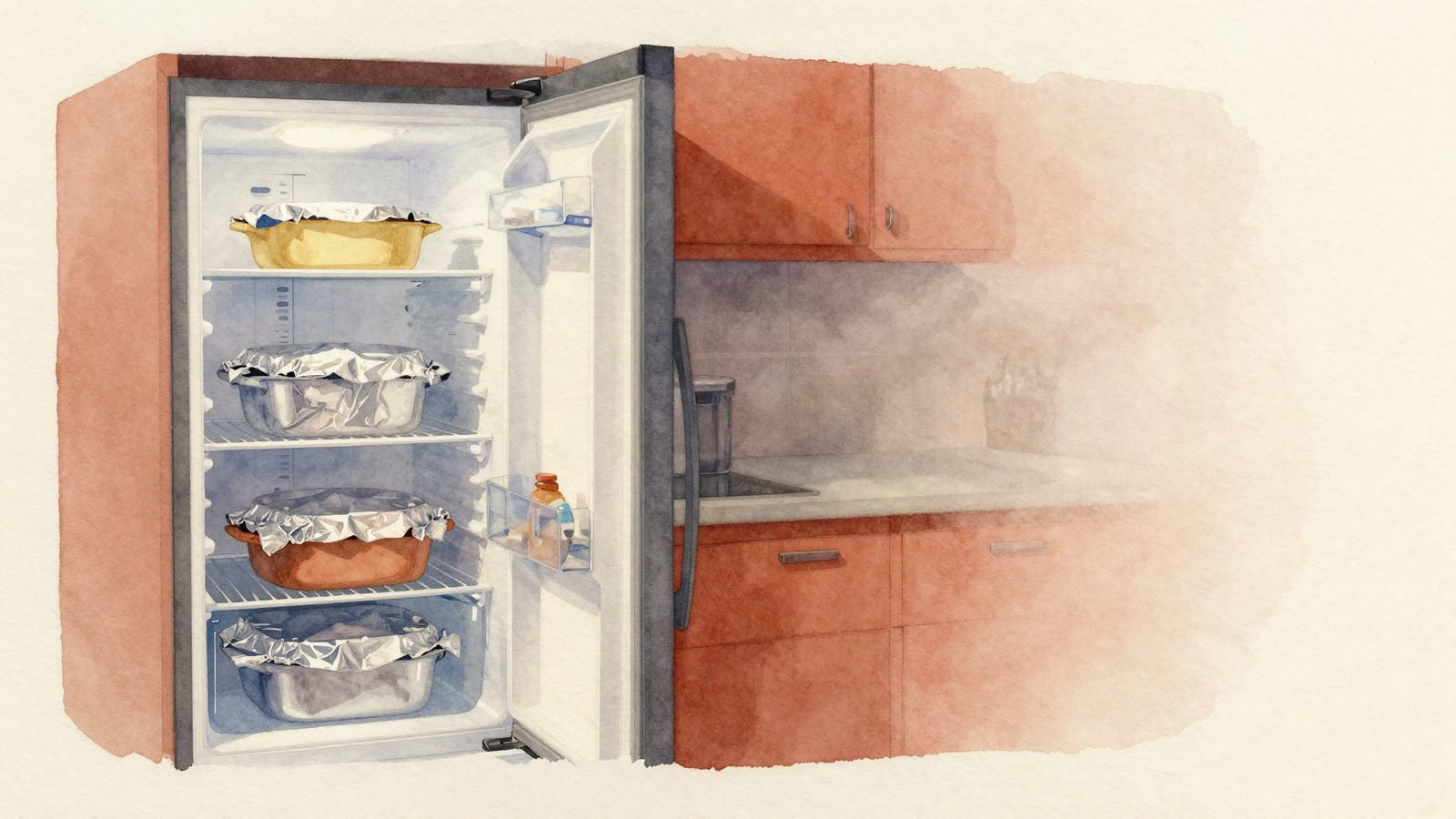
The cars are gone. The refrigerator is full of foil-covered dishes with names written on masking tape. Someone’s casserole pan is still in your sink, and you will have to figure out whose it is and return it, and that small errand feels impossibly large.
The short answer: The day after a funeral is often one of the hardest days of grief, because the busyness that carried you ends and the absence is suddenly the same size it was. You do not have to be productive, strong, or fine. Psalm 34:18 says God is near to those who have a broken heart. He does not leave with the guests.
Why the day after is harder than the funeral
For days before the service, there was a job to do. Calls to make, flowers to choose, a program to print, relatives to house. Grief was there, but it was busy.
And the funeral itself carries you. People hold your hands. They tell you stories you did not know. For a few hours, the person you lost is talked about constantly, and that is its own kind of company.
Then it ends. Everyone goes back to lives that continue. And the next morning, you wake up in a house that has no more planning in it, and the missing is exactly the same size as it was on the first day.
That is the day nobody warns you about. If you are in it now, you are not doing it wrong. It is simply the hardest day on the calendar that no one marks.
Where God is when everyone goes home
The LORD is nigh unto them that are of a broken heart; and saveth such as be of a contrite spirit.
Psalm 34:18, KJV
Nigh is an old word for near, and it is a word about location.
Not watching from a distance. Not waiting at church until you feel well enough to come back. Near. In the house. On the premises of the ache, closer to the broken than to anyone else, if the verse means what it says.
Everyone else who came to comfort you had somewhere else to be tonight. He does not.
A prayer for the day after the funeral
God, the cars are gone and the food is in the refrigerator and the house is so quiet I can hear the clock.
Everybody was here, and they were kind, and now they have gone back to lives that continue, and mine does not know how to. This is the day nobody warns you about. The service is over. There is nothing left to plan, and the missing is exactly the same size it was.
Do not leave with them. Everyone else had somewhere to be tonight. You do not.
I am not going to be productive today. I am going to move through these rooms slowly and I am going to fall apart at least once. Be with me in the rooms. Be with me when I fall apart.
Tomorrow is not my problem yet. Amen.
This prayer is one of twenty-four for the days you have no words of your own, including prayers for the first morning without him and the anniversary you are dreading. They are free.
What actually helps in the first week
Lower the bar to almost nothing. Eat something. Drink water. Sleep when you can. That is a full day right now.
Let the dishes wait. The casserole pans can go back in two weeks. Nobody is keeping track.
Accept the offers, even the awkward ones. If someone offers to mow the lawn or pick up groceries, say yes. People want to help and do not know how. Giving them a job helps them and you.
Expect the exhaustion. Grief is not only an emotion. It is physical work, and many people are surprised by how tired it makes them. This is normal, and it passes slowly.
Keep one person on call. Choose someone you can text at night without explaining. You may not use it. Knowing you can is enough.
When the silence becomes loneliness
In the weeks after, the calls and cards slow down. That is not because people stopped caring. It is because their lives resumed, and yours did not.
If you are still struggling a month or two from now, that is not a sign you are grieving badly. Grief does not run on the same calendar as other people’s attention. It may be worth finding a grief group, a pastor, or a counselor who will stay after everyone else has gone back to normal.
Frequently asked questions
What should I do the day after a funeral?
Very little. Rest, eat something simple, and allow yourself to grieve without a schedule. Accept help if it is offered. The day after a funeral is often exhausting and quiet, and there is no expectation to be productive.
Why do I feel worse after the funeral?
Before and during a funeral, planning and visitors keep you busy and surrounded. When they end, the absence becomes more noticeable. Many people feel worse in the days and weeks after the funeral than during the service itself. This is a normal part of grief.
What does the Bible say about grief and loneliness?
Psalm 34:18 says God is near to the brokenhearted. Jesus wept at the grave of His friend Lazarus in John 11:35, showing that grief is not a lack of faith. Scripture presents God as present in grief, not waiting for it to end.
Written by Ellen G. Coyle, author of A Year at His Feet.
If you want a companion for the whole year, A Year at His Feet is 365 short readings for the woman who is still carrying something.
If you are thinking about ending your life or harming yourself, please call or text 988 to reach the Suicide and Crisis Lifeline. You do not have to carry this alone tonight.